 YAVE
Crystal Palace
The history of Crystal Palace: the Glaziers, the Eagles and Glasner's three trophies

Crystal Palace were formed as a professional club on 10 September 1905 at the Crystal Palace exhibition building in Sydenham, South London, by the Crystal Palace Company, owner of the glass palace and its FA Cup final stadium, which wanted its own team to play there. The club traces its origins further back, to an amateur Crystal Palace team founded in 1861 — founder members of the FA and semi-finalists in the first FA Cup — and in 2022 changed the year on its crest to 1861; historians dispute whether the two clubs are truly the same institution, and the game's authorities still recognise Notts County (1862) as the oldest League club.
The Eagles — originally the Glaziers, until Malcolm Allison's 1973 rebrand — have played at Selhurst Park since 1924, a ground of around 25,500. Palace have never won the league title; their best finish is third, in 1990–91. For 120 years they won no major trophy at all — then, under Oliver Glasner, they won three in a year: the FA Cup in 2025, the Community Shield in 2025 and the UEFA Conference League in 2026. The records are old: Peter Simpson's 165 goals (1929–1935) and Jim Cannon's 660 appearances (1973–1988).
Contents
- A Club Built for a Glass Palace (1905–1920)
- Into the Football League and the Long Third-Tier Years (1920–1958)
- The Climb and the First Division at Last (1958–1973)
- Allison's Eagles and the "Team of the Eighties" (1973–1984)
- The Coppell Years: the 1990 Final and Third Place (1984–1998)
- Two Administrations, the 2013 Return and Glasner's Three Trophies (1998–present)
- Honours
- Timeline
- References
A Club Built for a Glass Palace (1905–1920)

The formation was guided by Edmund Goodman, Aston Villa's assistant secretary, who became Palace's longest-serving manager. Palace played at the FA Cup final stadium inside the exhibition grounds and won the Southern League Second Division in their first season, 1905–06. Cup giant-killings made the young club's name: Newcastle United beaten in the FA Cup in 1907, and holders Wolverhampton Wanderers beaten in 1909 — the first non-league side ever to knock out the cup holders. Palace were Southern League First Division runners-up in 1913–14. The First World War ended the Palace-ground era: the Admiralty requisitioned the exhibition building and its grounds, and in 1915 Palace were forced to leave, moving to the Herne Hill Velodrome and then, in 1918, to the Nest, the former ground of the defunct Croydon Common.
Into the Football League and the Long Third-Tier Years (1920–1958)
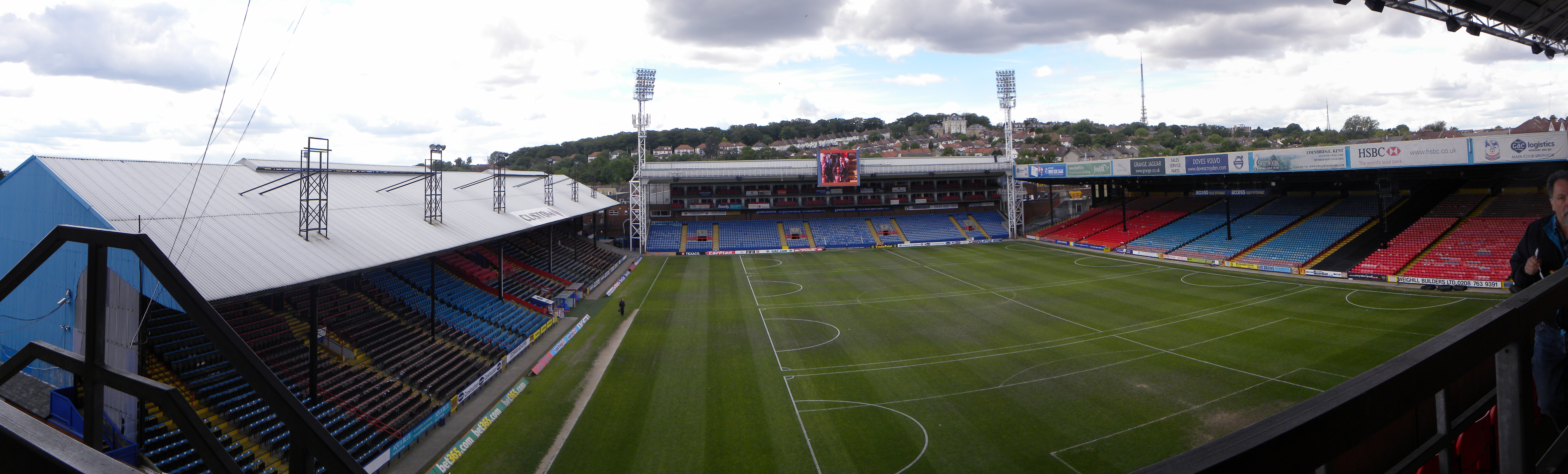
Palace were founder members of the Football League's new Third Division in 1920–21 and won it at the first attempt. In 1924 they moved to Selhurst Park, Archibald Leitch's new ground — and were relegated back to the Third Division South in its first season there. The inter-war decades were spent almost entirely in the Third Division South, with runners-up finishes in 1928–29, 1930–31 and 1938–39 but no promotion. Their shining light was Peter Simpson: signed in 1929, he scored a club-record 165 goals in just 195 appearances, including 54 goals in 1930–31 — 46 of them in the league — and six in one match against Exeter City; his records still stand. The post-war years were lean: Palace finished low enough to have to apply for re-election three times, and when the regional third tier was restructured in 1958 their 14th place put them in the new Fourth Division, the basement of English football.
The Climb and the First Division at Last (1958–1973)
Chairman Arthur Wait's appointment of Arthur Rowe in 1960 transformed Palace: promotion in 1960–61, and in April 1962 the historic friendly against Real Madrid, who played in London for the first time and won 4–3 at Selhurst Park a fortnight before their European Cup final. Successive promotions followed under Dick Graham, Third Division runners-up in 1963–64, and Bert Head: in 1968–69 Palace finished Second Division runners-up and reached the First Division for the first time, 64 years after the professional club was founded. The first top-flight spell, from 1969 to 1973, peaked with a 5–0 home win over Manchester United in 1972–73. Arthur Wait stepped down, Raymond Bloye took over and appointed Malcolm Allison in March 1973 — too late to stop relegation, but the start of a reinvention.
Allison's Eagles and the "Team of the Eighties" (1973–1984)
Under Allison, Palace fell again in 1974, into the Third Division — but the club that came back was unrecognisable: the nickname changed from the Glaziers to the Eagles, inspired by Benfica, claret and blue gave way to red-and-blue stripes, and the 1975–76 FA Cup run — Leeds United and Chelsea beaten, a semi-final against Southampton lost — announced the new Palace. Allison resigned in 1976. His successor Terry Venables won promotion in 1976–77 and again in 1978–79 as Second Division champions, clinched in front of the record Selhurst Park crowd of 51,482 against Burnley. The young side — Kenny Sansom, Vince Hilaire and the FA Youth Cup winners of 1977 and 1978 — briefly topped the entire Football League in the autumn of 1979 and was dubbed the "Team of the Eighties". It never happened: money problems forced sales, Venables left for Queens Park Rangers in October 1980, Allison's brief return failed, and Palace were relegated in 1981. Ron Noades took over the club, and the drift continued — until a 31-year-old Steve Coppell, retired by injury, was appointed in June 1984.
The Coppell Years: the 1990 Final and Third Place (1984–1998)
Coppell rebuilt patiently and won promotion through the play-offs in 1988–89. Then came the club's most famous cup run: in the 1990 FA Cup semi-final at Villa Park, Palace beat Liverpool 4–3 after extra time — Alan Pardew scoring the winner — seven months after Liverpool had beaten them 9–0 in the league. In the final, Palace drew 3–3 with Manchester United, Ian Wright, back from a broken leg, scoring twice as a substitute, before losing the replay 1–0. The peak came in 1990–91: Palace finished third in the First Division — still their highest league finish — and beat Everton 4–1 after extra time at Wembley to win the Zenith Data Systems Cup, a minor trophy from the post-Heysel years. Only England's European coefficient denied them a UEFA Cup place, and Wright left for Arsenal. Founder members of the Premier League in 1992, Palace were relegated in 1993 with 49 points — still the record for a relegated club. The yo-yo years followed: First Division champions in 1993–94, relegated again in 1995, a lost play-off final in 1996, a won play-off final in 1997 under the returning Coppell, and relegation again in 1998. Mark Goldberg's takeover that summer set up the crash.
Two Administrations, the 2013 Return and Glasner's Three Trophies (1998–present)
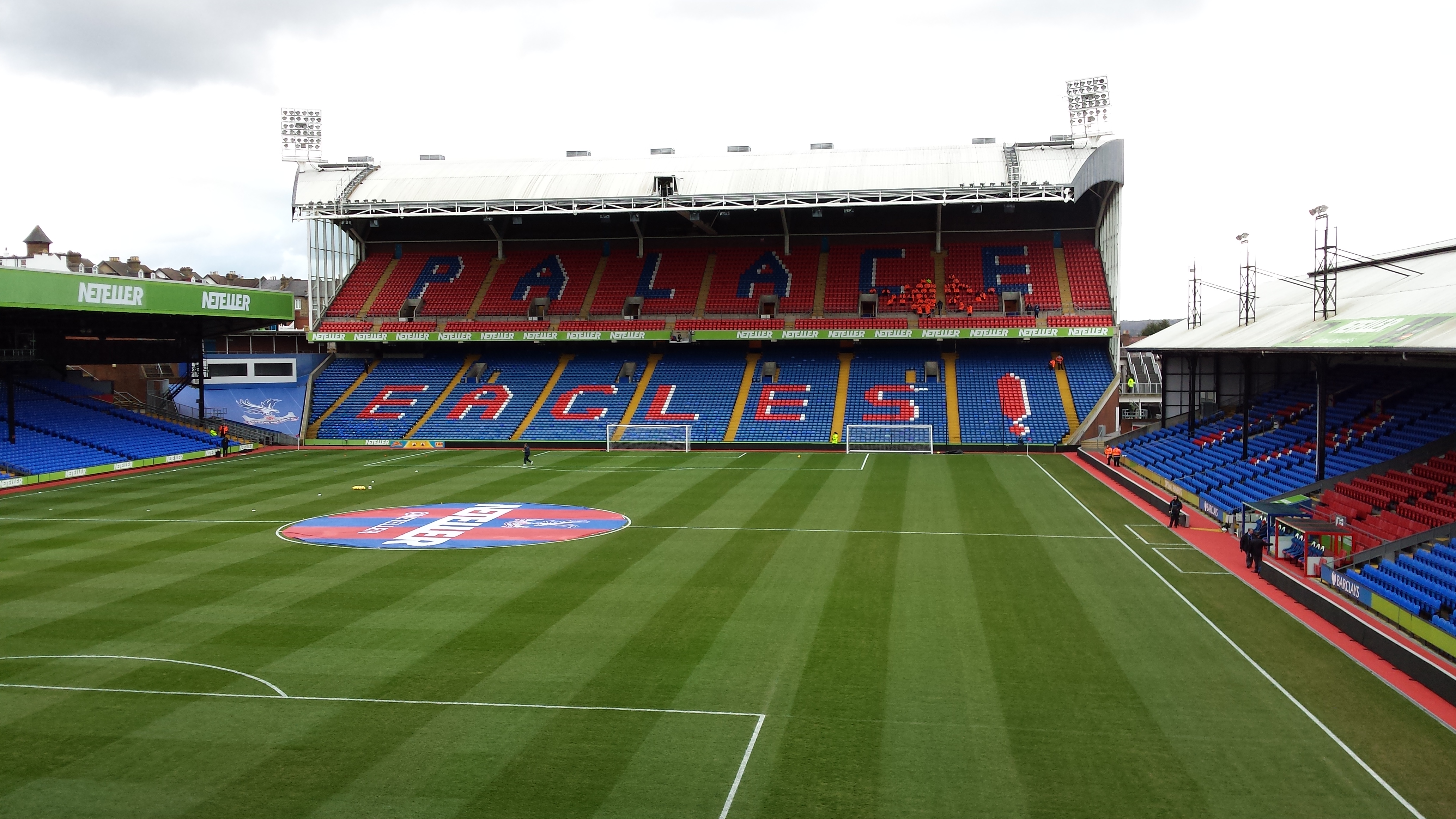
Goldberg's money ran out and Palace entered administration in March 1999. Simon Jordan took over, but after relegation from the Premier League in 2005 the debts returned, and in January 2010 Palace entered administration a second time — a ten-point deduction, star players sold, survival secured only by a 2–2 draw at Sheffield Wednesday on the final day. The CPFC 2010 consortium, led by Steve Parish, bought the club and, crucially, bought back the Selhurst Park freehold. Under Ian Holloway, Palace won the 2013 Championship play-off final, 1–0 against Watford after extra time — Wilfried Zaha, in his last game before joining Manchester United, won the penalty that 39-year-old Kevin Phillips converted. Palace have been in the Premier League ever since, by far their longest top-flight run, surviving under Tony Pulis, reaching the 2016 FA Cup final under Alan Pardew — lost 2–1 to Manchester United after extra time — and settling into mid-table under Roy Hodgson.
Oliver Glasner, appointed in February 2024, changed everything. On 17 May 2025 Palace beat Manchester City 1–0 at Wembley to win the FA Cup — the first major trophy in the club's history: Eberechi Eze volleyed in Daniel Muñoz's cross in the 16th minute, and Dean Henderson saved an Omar Marmoush penalty. In August 2025 they beat Liverpool on penalties, after a 2–2 draw, to win the Community Shield. The same summer brought a bitter twist: UEFA's Club Financial Control Body demoted Palace from the Europa League to the Conference League over multi-club ownership — John Textor's stakes in Palace and Lyon at the assessment date — the Court of Arbitration for Sport dismissed Palace's appeal, and Nottingham Forest took the Europa League place. Palace turned the demotion into glory, beating Rayo Vallecano 1–0 in Leipzig on 27 May 2026 — Jean-Philippe Mateta scoring early in the second half — to win the Conference League in Glasner's final game in charge: a first European trophy, in the club's debut season in a major UEFA competition.

Honours
| Trophy | Titles | Years |
|---|---|---|
| League title (First Division / Premier League) | 0 | Never won — best finish 3rd, 1990–91 |
| FA Cup | 1 | 2024–25 (finalists 1989–90, 2015–16) |
| FA Community Shield | 1 | 2025 |
| UEFA Conference League | 1 | 2025–26 |
| League Cup | 0 | Never won |
| Full Members' Cup (Zenith Data Systems Cup) | 1 | 1990–91 (minor trophy) |
| Second Division (second tier) | 2 | 1978–79, 1993–94 |
| Third Division (third tier) | 1 | 1920–21 |
Timeline
- 1905 — The professional Crystal Palace Football Club is formed on 10 September at the Crystal Palace exhibition building, under Edmund Goodman; Southern League Second Division champions in the first season, 1905–06. (The club claims descent from the amateur Crystal Palace team of 1861.)
- 1920–21 — Founder members of the Football League Third Division, Palace win it at the first attempt; in 1924 they move to the new Selhurst Park, their home ever since.
- 1930–31 — Peter Simpson scores 54 goals in a season — 46 in the league, six in one game against Exeter City — on his way to a club-record 165 goals in 195 appearances (1929–1935); Jim Cannon's 660 appearances (1973–1988) remain the appearance record.
- 1969 — After the 1962 Real Madrid friendly and promotions in 1961 and 1964, Bert Head's Palace finish Second Division runners-up and reach the First Division for the first time.
- 1979 — Terry Venables' young Second Division champions — the "Team of the Eighties" — are crowned in front of Selhurst Park's record crowd of 51,482 against Burnley; the side briefly tops the whole Football League that autumn.
- 1990 — Steve Coppell's Palace beat Liverpool 4–3 after extra time in the FA Cup semi-final at Villa Park (Pardew's winner), then draw 3–3 with Manchester United in the final before losing the replay 1–0.
- 1990–91 — Palace finish 3rd in the First Division — their highest league finish — and win the Zenith Data Systems Cup, beating Everton 4–1 after extra time at Wembley.
- 1999 / 2010 — Palace enter administration twice: under Mark Goldberg in 1999, and again in January 2010, when a 10-point deduction follows and survival comes on the final day at Sheffield Wednesday; the CPFC 2010 consortium led by Steve Parish buys the club and the Selhurst Park freehold.
- 2013 — Ian Holloway's Palace beat Watford 1–0 after extra time in the Championship play-off final (Kevin Phillips' penalty, won by Wilfried Zaha) — the start of a Premier League run that continues today, the club's longest in the top flight.
- 2016 — A second FA Cup final lost to Manchester United, 2–1 after extra time, under former semi-final hero Alan Pardew.
- 2025 — The FA Cup is won at last: Palace beat Manchester City 1–0 at Wembley on 17 May (Eberechi Eze; Dean Henderson's penalty save) for the club's first major trophy, under Oliver Glasner; in August they beat Liverpool on penalties to win their first Community Shield — while CAS upholds their demotion from the Europa League to the Conference League over multi-club ownership, Nottingham Forest taking the Europa League place.
- 2026 — Palace beat Rayo Vallecano 1–0 in Leipzig (27 May, Jean-Philippe Mateta) to win the UEFA Conference League — a first European trophy, in their debut major European campaign and in Glasner's final game in charge.
References
- Wikipedia — "Crystal Palace F.C." (history, honours and records).
- Wikipedia — "List of Crystal Palace F.C. records and statistics" and "Selhurst Park".
- The FA — 2025 FA Cup final and 2025 Community Shield reports; UEFA.com — the 2026 Conference League final.
- Sky Sports — the UEFA demotion and the dismissed CAS appeal (August 2025); Crystal Palace FC — cpfc.co.uk record and history articles.
- Wikimedia Commons — file pages for the photographs used.
Image source: Wikimedia Commons.


