 YAVE
English Premier League
History, Records, Stats and the Stories Behind England's Top Flight

The English Premier League is the top division of football in England and, by almost every measure, the richest and most watched league in the world. It began in 1992, when the clubs of the old Football League First Division broke away to form a new competition that could sell its own television rights — but top-flight football in England is far older, stretching back to the Football League of 1888.
Contents
- History and facts
- League system
- Stats
- Audience
- Players
- English Premier League timeline
History and facts

England's top flight did not begin in 1992. The Football League was founded in 1888, and its First Division was the top division for 104 years. What changed in 1992 was money and power: the First Division clubs resigned from the Football League and formed the FA Premier League, free to negotiate their own broadcast and sponsorship deals. BSkyB paid a then-staggering £304 million for the first five-year live rights deal, and modern football television was born. Manchester United won the first Premier League title in 1992–93 — their first championship in 26 years.

Sir Alex Ferguson's United became the league's first empire, winning 13 Premier League titles, including the famous 1998–99 Treble of league, FA Cup and European Cup. There were interruptions: Blackburn Rovers, bankrolled by Jack Walker and powered by Alan Shearer's goals, won in 1994–95, and in 2003–04 Arsène Wenger's Arsenal produced the league's defining feat of consistency — the "Invincibles" season, a whole championship won without losing a single match.
The money era arrived with Roman Abramovich's Chelsea, whose 2004–05 title under José Mourinho — a record 95 points and only 15 goals conceded — ended the United–Arsenal duopoly. Then came the most famous moment in the league's history: on 13 May 2012, Manchester City trailed QPR 2–1 in stoppage time on the final day, needing a win for their first title in 44 years. Edin Džeko equalised, and Sergio Agüero scored at 93:20 to snatch the title from United on goal difference.
Four years later came the greatest fairytale in team sport: Leicester City, who had narrowly escaped relegation the season before and were priced at 5000–1 by bookmakers, won the 2015–16 title by ten points under Claudio Ranieri. Since then, Pep Guardiola's Manchester City have raised the bar to a 100-point season (2017–18), a Treble (2022–23) and four consecutive titles (2020–21 to 2023–24), while domestic TV rights have climbed to a reported £6.7 billion for 2025–29 — making the Premier League by far the world's richest football league.
League system
The Premier League has 20 clubs, each playing the other home and away — 38 matches a season, running from August to May. The bottom three clubs are relegated to the EFL Championship, replaced by three promoted clubs. The top four qualify for the UEFA Champions League (England has recently also earned a fifth place through UEFA's coefficient), fifth place and the FA Cup winners go to the UEFA Europa League, and the League Cup winners take the UEFA Conference League place, with spots cascading down the table when cup winners have already qualified.
Stats
Teams with most titles
Seven clubs have won the Premier League. Across the whole history of the English top flight, the picture is different — Liverpool and Manchester United lead with 20 titles each.
| Club | Premier League titles | All-time top-flight titles |
|---|---|---|
| Manchester United | 13 | 20 |
| Manchester City | 8 | 10 |
| Chelsea | 5 | 6 |
| Arsenal | 4 | 14 |
| Liverpool | 2 | 20 |
| Blackburn Rovers | 1 | 3 |
| Leicester City | 1 | 1 |
Teams with most league participation
Six clubs — Arsenal, Chelsea, Everton, Liverpool, Manchester United and Tottenham Hotspur — have played in every Premier League season. Across the full top-flight history since 1888, Everton stand alone at the top.
| Club | All-time top-flight seasons |
|---|---|
| Everton | 124 |
| Aston Villa | 113 |
| Liverpool | 112 |
| Arsenal | 110 |
| Manchester United | 102 |
Audience
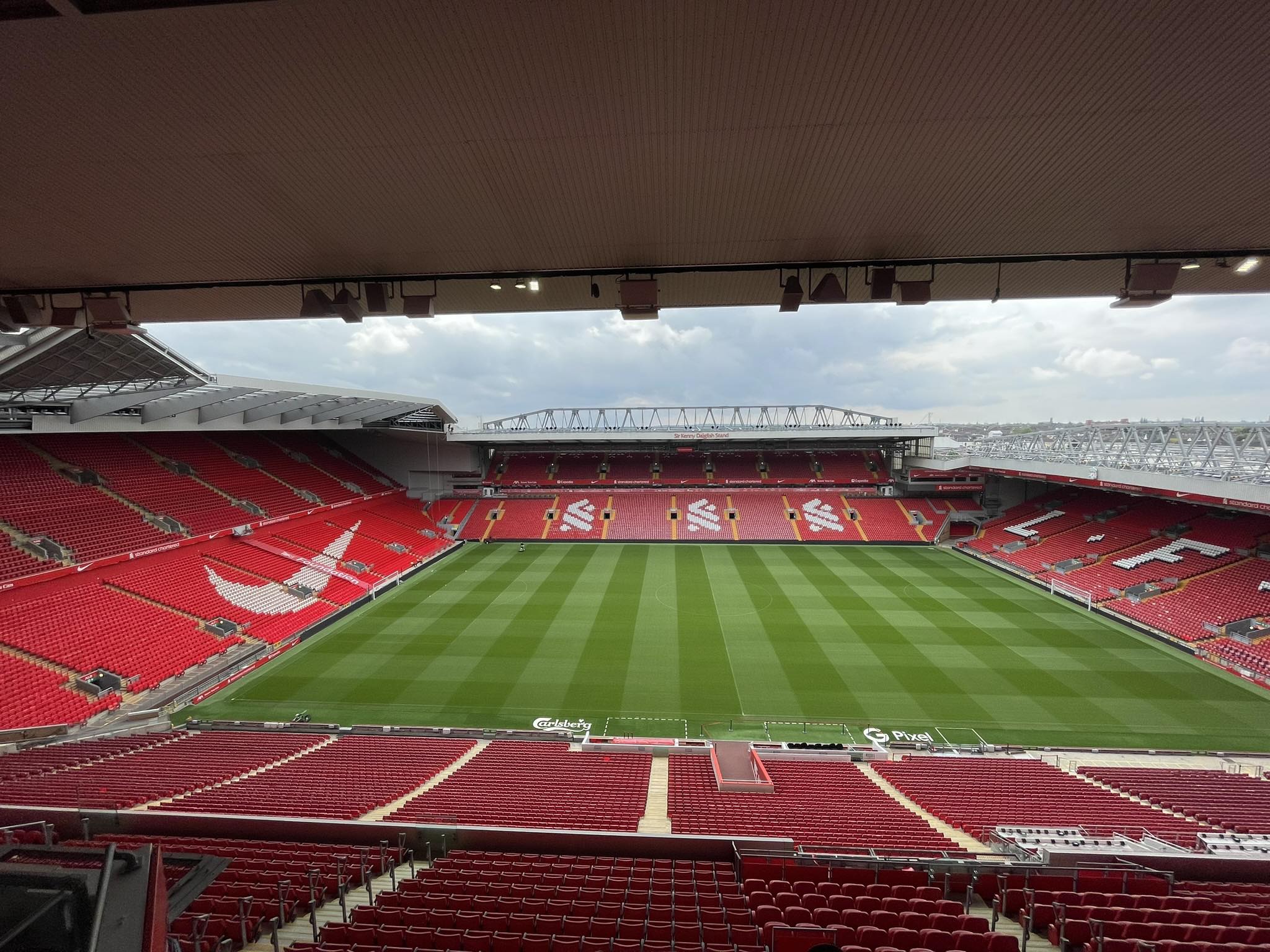
Premier League stadiums are among the biggest and fullest in world football, and the league is broadcast to hundreds of millions of homes worldwide.

Stadium capacities
| Stadium | Club | Capacity |
|---|---|---|
| Old Trafford | Manchester United | 74,158 |
| Tottenham Hotspur Stadium | Tottenham Hotspur | 62,850 |
| Anfield | Liverpool | 61,276 |
| Etihad Stadium | Manchester City | 61,038 |
| Emirates Stadium | Arsenal | 60,704 |
Players
Top goalscorers
| Player | Goals | Clubs |
|---|---|---|
| Alan Shearer | 260 | Blackburn Rovers, Newcastle United |
| Harry Kane | 213 | Tottenham Hotspur |
| Wayne Rooney | 208 | Everton, Manchester United |
| Mohamed Salah | 193 | Chelsea, Liverpool |
| Andrew Cole | 187 | Newcastle United, Manchester United, Blackburn Rovers, Fulham, Manchester City, Portsmouth |
English Premier League timeline
- 1888 — The Football League is founded; its First Division is England's top flight for the next 104 years.
- 1992 — The First Division clubs break away and the Premier League begins; Manchester United win the first title.
- 2003–04 — Arsenal's "Invincibles" win the title unbeaten, still the only undefeated Premier League season.
- 2015–16 — Leicester City win the title at pre-season odds of 5000–1.
- 2017–18 — Manchester City become the first team to reach 100 points in a Premier League season.
- 2023–24 — Manchester City win a fourth consecutive title, a first in English top-flight history.
References
https://en.wikipedia.org/wiki/Premier_League
https://en.wikipedia.org/wiki/List_of_Premier_League_seasons
Image source: Wikimedia Commons


