 YAVE
Liverpool FC
The history of Liverpool: from the Boot Room dynasty to Istanbul, Klopp and a 20th title

Liverpool Football Club was born out of an argument. In 1892 Everton, who played at Anfield, fell out with the ground's owner, John Houlding, over rent, and left for Goodison Park across Stanley Park. Houlding was left with an empty stadium, so he founded a new club to play in it. Liverpool F.C., officially founded on 3 June 1892, went on to become the most successful English club in European football, with 20 league titles and six European Cups.
The Reds have played at Anfield ever since — a ground now holding 61,276 people, expanded again in 2024. Their history runs in great waves: early championships, post-war decline, the Boot Room dynasty built by Bill Shankly and Bob Paisley that ruled England and Europe, the traumas of Heysel and Hillsborough, a 30-year wait for a league title, and the revival under Jürgen Klopp that ended it.
Contents
- Formation and Early Titles (1892–1946)
- Post-War Decline and Relegation (1946–1959)
- Shankly and the Boot Room (1959–1974)
- Paisley, Fagan and Dalglish: Total Dominance (1974–1991)
- The Long Title Wait, Houllier and Istanbul (1991–2015)
- Klopp Revival and the Slot Title (2015–present)
- Honours
- Timeline
- References
Formation and Early Titles (1892–1946)
Houlding's new team — first named Everton Athletic before the FA insisted on a change — won the Lancashire League in its debut season and joined the Football League's Second Division in 1893. Under manager Tom Watson, Liverpool won their first league championship in 1901 and a second in 1906. There were consecutive titles in 1922 and 1923, but also a lost FA Cup final in 1914 and long stretches of ordinariness. Goalkeeper Elisha Scott was the era's great servant. When football resumed after the Second World War, Liverpool won the first post-war championship in 1946–47 under George Kay — a fifth title that proved to be the end of an era rather than a beginning.
Post-War Decline and Relegation (1946–1959)
The 1950s brought slow decline. Liverpool lost the 1950 FA Cup final, and in 1954 they were relegated to the Second Division after 49 unbroken years in the top flight. The record Anfield crowd of 61,905 had watched an FA Cup tie against Wolverhampton Wanderers in 1952, but by the end of the decade the club was a Second Division side that had just lost an FA Cup tie to non-league Worcester City. It was at that low point, in 1959, that Liverpool appointed the man who would rebuild everything: Bill Shankly.
Shankly and the Boot Room (1959–1974)

Shankly released 24 players and turned a boot storage room at Anfield into the coaches' strategy room — the famous Boot Room, where he, Joe Fagan, Reuben Bennett and Bob Paisley reshaped the team. Promotion came in 1962, the league title in 1964 — the club's first for 17 years — and in 1965 Liverpool won the FA Cup for the first time in their history. Another championship followed in 1966. Under Shankly the club adopted its all-red strip and its anthem, "You'll Never Walk Alone". In 1972–73 Liverpool won the league and the UEFA Cup together, and after one more FA Cup in 1974 Shankly retired, handing over to his Boot Room colleague Bob Paisley.
Paisley, Fagan and Dalglish: Total Dominance (1974–1991)

Paisley became the most successful manager in Liverpool's history: in nine seasons his teams won 20 trophies, including six league titles, three consecutive League Cups, the UEFA Cup in 1976 and three European Cups — in 1977, 1978 and 1981. His successor Joe Fagan won the league, League Cup and European Cup in his first season, 1983–84, the first English side to win three trophies in a season. Record scorer Ian Rush, who finished with 346 goals, and record appearance maker Ian Callaghan, with 857 games, spanned this golden age.
The era also holds the club's two darkest days. At the 1985 European Cup final at Heysel in Brussels, 39 fans died after Liverpool supporters breached a fence and a retaining wall collapsed; English clubs were banned from Europe for five years, and Liverpool for a year longer. On 15 April 1989, at an FA Cup semi-final at Hillsborough, 97 Liverpool supporters died in a crowd crush caused by a failure of police control; the Taylor Report that followed led to all-seater stadiums in the top divisions. On the pitch, player-manager Kenny Dalglish won the League and FA Cup Double in 1985–86 and further titles in 1987–88 and 1989–90 — Liverpool's last championship for 30 years.
The Long Title Wait, Houllier and Istanbul (1991–2015)

Dalglish resigned in 1991, and the league title became an obsession Liverpool could not satisfy. Graeme Souness won the FA Cup in 1992 and Roy Evans the League Cup in 1995. Gérard Houllier's team won a treble of FA Cup, League Cup and UEFA Cup in 2001, and another League Cup in 2003. Then came the night that defines the era: in Istanbul in 2005, Rafael Benítez's Liverpool trailed AC Milan 3–0 at half-time in the Champions League final, drew 3–3, and won on penalties — a fifth European Cup, which the club was awarded permanently. There was an FA Cup in 2006 and another European final in 2007, but off the pitch the ownership of George Gillett and Tom Hicks brought turmoil, until Fenway Sports Group took over in October 2010. A record eighth League Cup came in 2011–12, and Brendan Rodgers' side finished second in 2013–14 — close, but still not champions.
Klopp Revival and the Slot Title (2015–present)
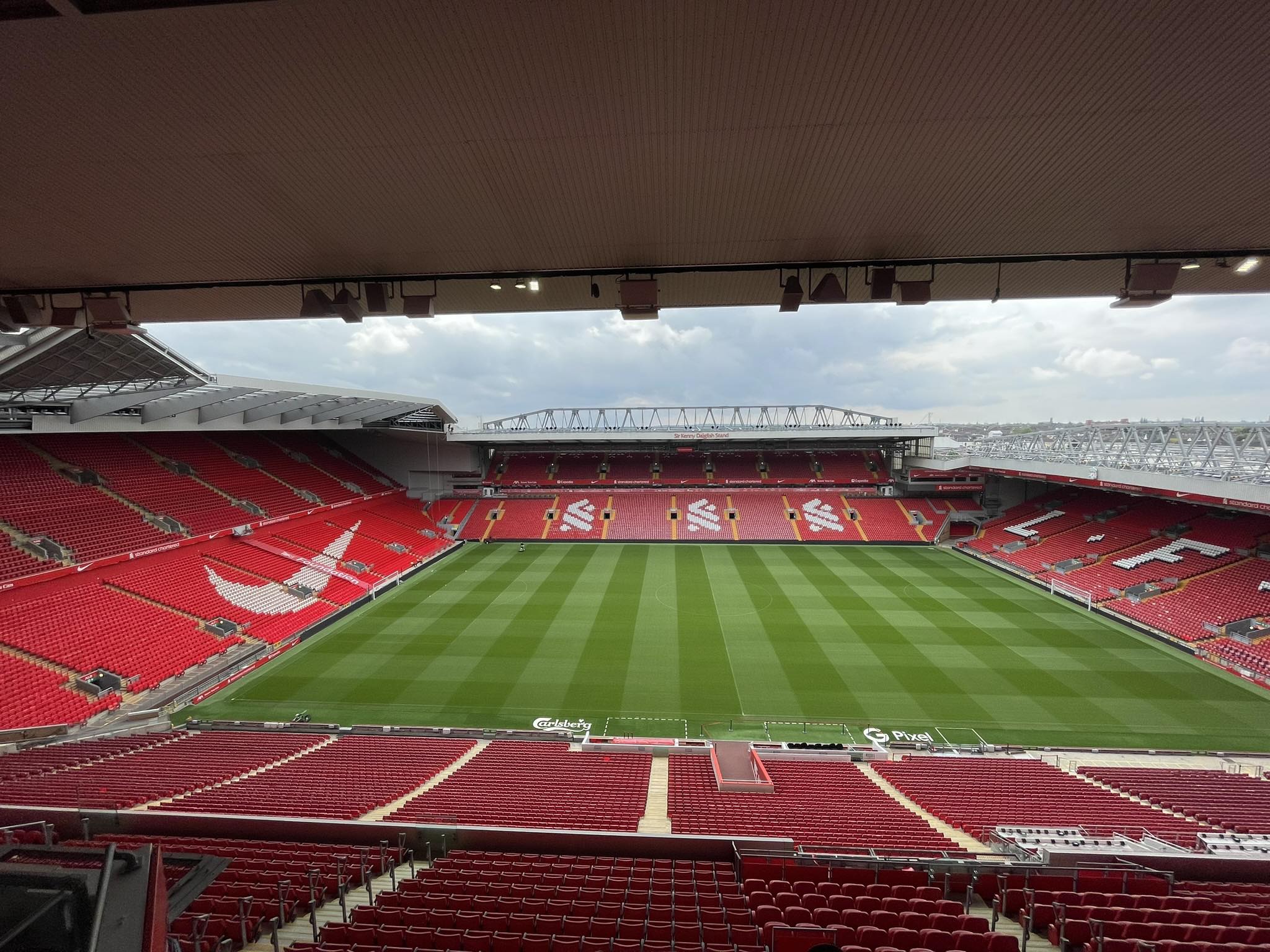
Jürgen Klopp arrived in October 2015 and rebuilt Liverpool as one of Europe's best teams. After losing the 2018 Champions League final, his side won the trophy in 2019, beating Tottenham Hotspur 2–0 for a sixth European Cup, and added the UEFA Super Cup and the club's first FIFA Club World Cup the same year. In 2019–20 came the prize supporters had waited three decades for: the Premier League title, Liverpool's 19th championship, won with seven games to spare and 99 points. Klopp's team won an FA Cup and League Cup double in 2021–22, and his final trophy was the 2024 League Cup. His successor, Arne Slot, then did something remarkable: in his first season, 2024–25, Liverpool won their 20th league title, equalling Manchester United's record.
Honours
| Trophy | Titles | Years |
|---|---|---|
| League title (First Division / Premier League) | 20 (joint record) | 1900–01, 1905–06, 1921–22, 1922–23, 1946–47, 1963–64, 1965–66, 1972–73, 1975–76, 1976–77, 1978–79, 1979–80, 1981–82, 1982–83, 1983–84, 1985–86, 1987–88, 1989–90, 2019–20, 2024–25 |
| FA Cup | 8 | 1964–65, 1973–74, 1985–86, 1988–89, 1991–92, 2000–01, 2005–06, 2021–22 |
| League Cup | 10 (record) | 1980–81, 1981–82, 1982–83, 1983–84, 1994–95, 2000–01, 2002–03, 2011–12, 2021–22, 2023–24 |
| FA Charity Shield / Community Shield | 16 | 16 wins, some of them shared |
| European Cup / UEFA Champions League | 6 (English record) | 1977, 1978, 1981, 1984, 2005, 2019 |
| UEFA Cup | 3 (English record) | 1973, 1976, 2001 |
| UEFA Super Cup | 4 (English record) | 1977, 2001, 2005, 2019 |
| FIFA Club World Cup | 1 | 2019 |
Liverpool's record scorer is Ian Rush, with 346 goals, and their record appearance maker is Ian Callaghan, with 857 appearances between 1960 and 1978. Bob Paisley remains the club's most successful manager, with 20 trophies in nine seasons.
Timeline
- 1892 — Liverpool F.C. founded by John Houlding at Anfield after Everton leave the ground over a rent dispute; officially founded on 3 June.
- 1901 — First league championship, under Tom Watson.
- 1965 — First FA Cup, under Bill Shankly; the league title follows in 1966, after promotion in 1962.
- 1977 — First European Cup, under Bob Paisley; retained in 1978, with further wins in 1981 and 1984.
- 1985 — Heysel Stadium disaster in Brussels (39 deaths); English clubs are banned from Europe for five years, Liverpool for a year longer.
- 1989 — Hillsborough disaster, 15 April: 97 Liverpool supporters die in a crowd crush; the Taylor Report that follows leads to all-seater stadiums.
- 2005 — Istanbul: Liverpool beat AC Milan on penalties after drawing 3–3, winning a fifth European Cup under Rafael Benítez.
- 2019 — Sixth European Cup under Jürgen Klopp, followed by the UEFA Super Cup and the club's first FIFA Club World Cup.
- 2020 — Premier League title under Klopp: Liverpool's first league title in 30 years, their 19th overall.
- 2025 — 20th league title under Arne Slot in his first season, equalling Manchester United's record.
References
- Wikipedia — "Liverpool F.C." (history, honours and records).
- Wikipedia — "Anfield" (stadium history and capacity).
- Liverpool FC — official club access statement (Anfield capacity).
- Wikimedia Commons — file pages for the photographs used.
Image source: Wikimedia Commons.


