 YAVE
Luton Town
The Hatters' Rise, Fall and Rise Again — from the 1988 League Cup to the Premier League

Luton Town Football Club were founded on 11 April 1885 at a public meeting in the town hall, bringing together players from Luton Wanderers and Luton Excelsior. Nicknamed the Hatters, after the town's hat-making trade, they have played at Kenilworth Road, their home since 1905, with a capacity of 12,056. Luton were the first club in southern England to turn fully professional, in 1891.
Luton's only major trophy is the League Cup, won in 1988; they were FA Cup finalists in 1959 and Football League Trophy winners in 2009. Gordon Turner is Luton's record goalscorer with 276 goals in all competitions, including a club-record 243 league goals. Bob Morton holds the club appearance record with 562 appearances in all competitions; Fred Hawkes played a record 509 league matches, most of them in the Southern League.
Contents
- Southern League Pioneers and a First Home (1885–1920)
- Joe Payne, Gordon Turner and the Long Climb (1920–1955)
- The First Division, Wembley and the Great Fall (1955–1965)
- Pleat, the Plastic Pitch and the 1988 League Cup (1965–1992)
- Decline, Administrations and the 30-Point Fall (1992–2009)
- From Non-League to the Premier League (2009–present)
- Honours
- Timeline
- References
Southern League Pioneers and a First Home (1885–1920)
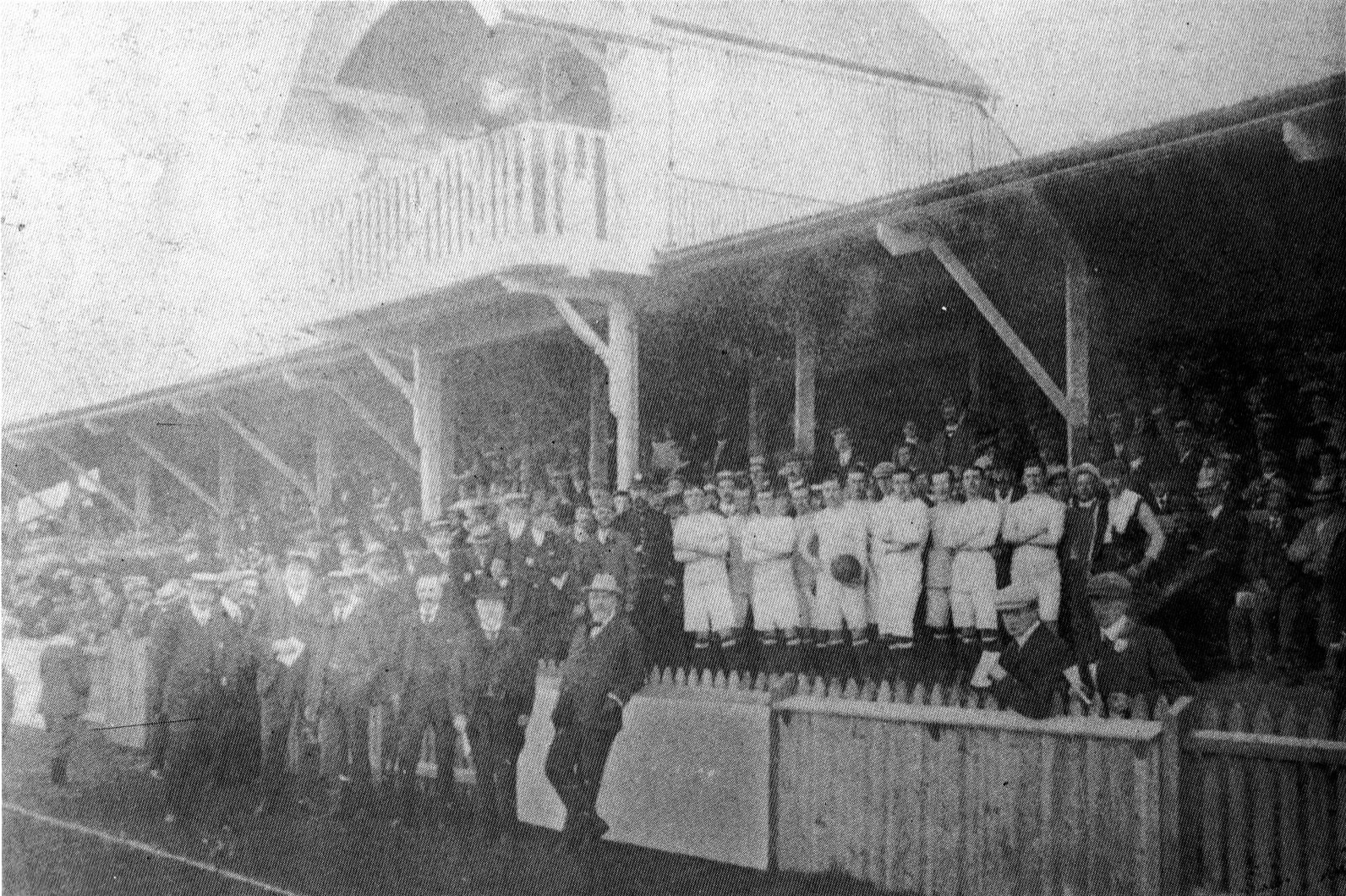
Founded at Dallow Lane in 1885, Luton turned fully professional in 1891 — the first club in the south of England to do so — and were founder members of the Southern League in 1894, twice finishing runners-up. A brief Football League spell between 1897 and 1900 proved financially ruinous, although the United League title was won in 1897–98. In 1905 the club moved to Kenilworth Road, its home ever since, and in 1907 Bob Hawkes became Luton's first England international.
Joe Payne, Gordon Turner and the Long Climb (1920–1955)
Luton rejoined the Football League in 1920 and settled into the Third Division South. The era's immortal moment came on 13 April 1936, when Joe Payne scored ten goals in a 12–0 win over Bristol Rovers — a Football League record that still stands. Payne's 55 league goals the following season — 58 in all competitions — fired Luton to the Third Division South title in 1936–37. After the war, Dally Duncan built a strong Second Division side around Gordon Turner, Bob Morton and Syd Owen, and in 1954–55 Luton finished runners-up and were promoted to the First Division for the first time. Turner and Morton each spent fifteen years or more at Kenilworth Road, and their records — 276 goals and 562 appearances respectively — still stand today.
The First Division, Wembley and the Great Fall (1955–1965)
Luton's top-flight debut came in 1955–56, and in 1959 they reached their first major final, losing the FA Cup final to Nottingham Forest at Wembley; a record crowd of 30,069 had watched the quarter-final replay against Blackpool at Kenilworth Road, and Syd Owen was named FWA Footballer of the Year. Relegation in 1960 began a spectacular collapse: within five years Luton had fallen to the Fourth Division, the first club to drop from the first tier to the fourth.
Pleat, the Plastic Pitch and the 1988 League Cup (1965–1992)

Fourth Division champions in 1967–68, Luton climbed back and spent a single season in the First Division in 1974–75. David Pleat's side then won the Second Division in 1981–82 and survived in the top flight on the final day of 1982–83, Raddy Antić's late winner at Manchester City prompting Pleat's famous jig across the Maine Road pitch. An artificial pitch was installed in 1985 (it remained until 1991) and away supporters were banned from Kenilworth Road between 1986 and 1990 after the 1985 Millwall riot — a ban that even saw Luton expelled from the 1986–87 League Cup. Luton finished seventh in 1986–87, still their best-ever league finish, and under Ray Harford won the League Cup in 1988, beating Arsenal 3–2 at Wembley with Brian Stein's last-kick winner; they were runners-up to Nottingham Forest a year later, and also reached the Full Members' Cup final in 1988. The side was built around men like Mal Donaghy, who won 58 caps for Northern Ireland while at the club, the most by any Luton player. As League Cup winners they would have taken a UEFA Cup place for 1988–89, but English clubs were banned from Europe after the Heysel disaster. Luton were relegated from the top flight in 1992, on the eve of the Premier League.
Decline, Administrations and the 30-Point Fall (1992–2009)
The 1990s brought a slide to the third tier, partly redeemed by the League One title of 2004–05 under Mike Newell. Off the pitch the decade was chaotic: the John Gurney episode of 2003, repeated administrations, relegation in 2007, and relegation again in 2008 after a ten-point deduction for entering administration. For 2008–09 the FA and Football League docked Luton a combined 30 points for financial irregularities — an impossible handicap. Luton won the Football League Trophy at Wembley that season, beating Scunthorpe United after extra time, but were relegated out of the Football League.
From Non-League to the Premier League (2009–present)

Five seasons in the Conference Premier brought three failed play-off campaigns, but also a famous FA Cup win at Norwich City in January 2013 — Luton became the first non-League side since 1989 to beat top-flight opposition in the competition. When the title finally came in 2013–14, it was emphatic: John Still's side finished as Conference Premier champions with 101 points. John Still's team won the Conference title in 2013–14 with 101 points, and back-to-back promotions followed: League Two runners-up in 2017–18, League One champions in 2018–19. In May 2023 Luton beat Coventry City 6–5 on penalties after a 1–1 draw at Wembley to win the Championship play-offs and reach the Premier League for the first time, nine years after playing non-League football — completing a rise through every division that had begun in the Conference.

The Premier League stay lasted one season. Luton were relegated from the Premier League in 2024 and from the Championship in 2025, and Jack Wilshere, a former Luton academy player, was appointed manager in October 2025. The club plans to move to a new stadium at Power Court.
Honours
| Trophy | Titles | Years |
|---|---|---|
| League title (First Division / Premier League) | 0 | Never won — best finish: 7th, 1986–87 |
| FA Cup | 0 | Never won — runners-up 1958–59 |
| League Cup | 1 | 1987–88 (runners-up 1988–89) |
| Football League Trophy | 1 | 2008–09 |
| Second Division (second tier) | 1 | 1981–82 |
| Third Division South / League One (third tier) | 3 | 1936–37, 2004–05, 2018–19 |
| Fourth Division (fourth tier) | 1 | 1967–68 |
| Conference Premier (fifth tier) | 1 | 2013–14 |
Timeline
- 1885 — Luton Town founded on 11 April at a public meeting in the town hall; based initially at Dallow Lane.
- 1891 — Luton become the first club in southern England to turn fully professional.
- 1905 — The club moves to Kenilworth Road, its home ever since.
- 1936 — Joe Payne scores 10 goals against Bristol Rovers — a Football League record that still stands; Luton win the Third Division South title the following season.
- 1955 — Second Division runners-up: Luton are promoted to the First Division for the first time.
- 1959 — Luton reach their first major final, losing the FA Cup final to Nottingham Forest; Kenilworth Road's record crowd of 30,069 watches the quarter-final replay against Blackpool.
- 1982 — Second Division champions under David Pleat; a year later Raddy Antić's late winner at Manchester City keeps Luton in the First Division on the final day.
- 1988 — Luton win the League Cup at Wembley, beating Arsenal 3–2 with Brian Stein's last-kick winner — the club's only major trophy; the post-Heysel European ban denies them a UEFA Cup place.
- 2009 — Docked 30 points for financial irregularities, Luton are relegated out of the Football League — but win the Football League Trophy at Wembley in the same season.
- 2014 — Conference Premier champions with 101 points under John Still: Luton return to the Football League after five years.
- 2019 — League One champions — a second successive promotion, four years after returning to the League.
- 2023 — Luton beat Coventry City on penalties at Wembley to win the Championship play-offs and reach the Premier League for the first time — nine years after playing non-League football.
References
- Wikipedia — "Luton Town F.C.", "Kenilworth Road" and "List of Luton Town F.C. records and statistics".
- Football Club History Database — Luton Town (season-by-season record).
- Hatters Heritage — "140 Years of Luton Town — The Stats".
- National Football Museum — "Objects of the Week: Luton Town".
- Wikimedia Commons — file pages for the photographs used.
Image source: Wikimedia Commons.


