 YAVE
Southampton
The history of Southampton: the Saints, the 1976 FA Cup and the long road back from administration
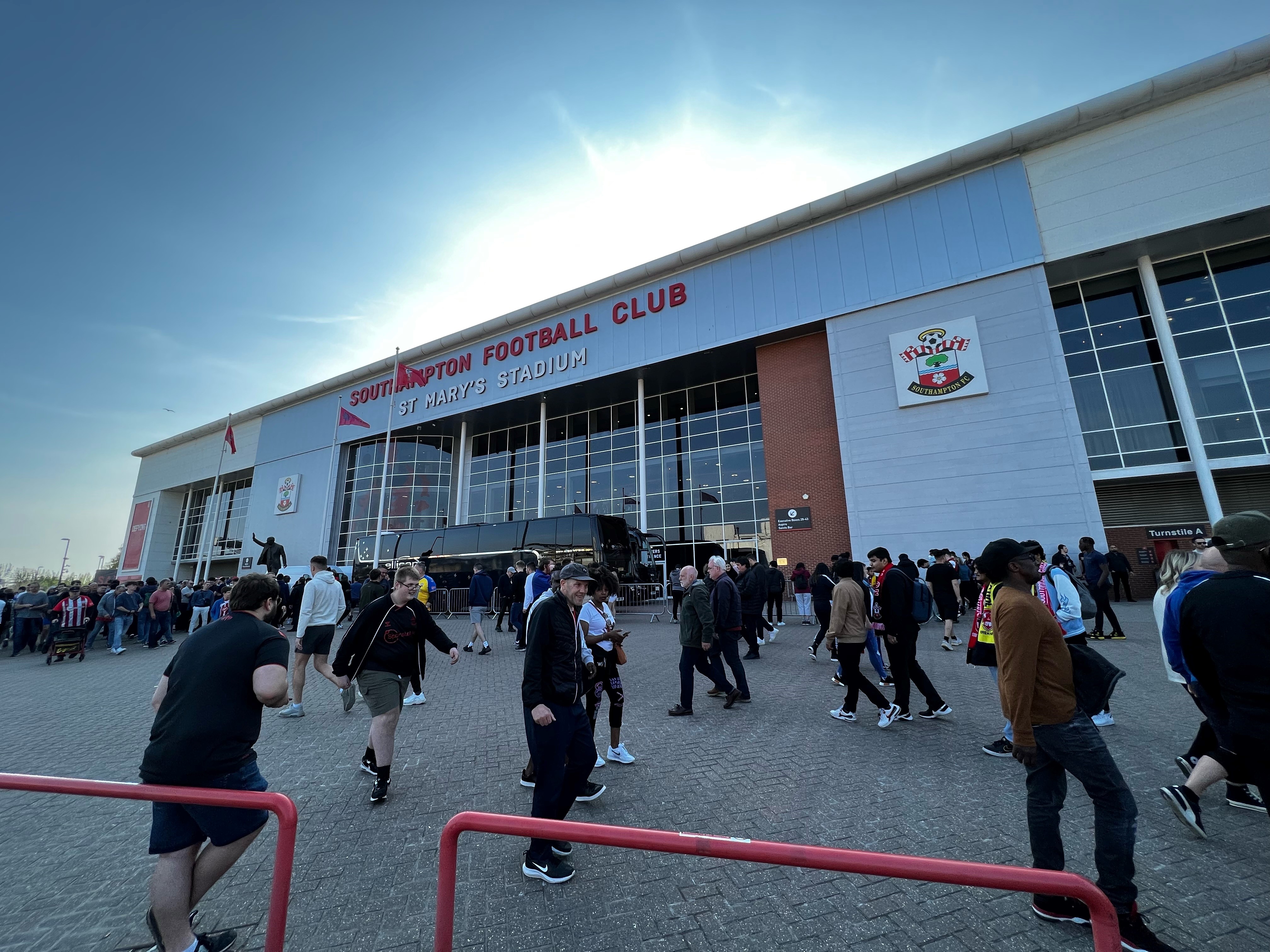
Southampton were founded on 21 November 1885 at St Mary's Church, by members of the St Mary's Church of England Young Men's Association — which is why they are known, simply, as the Saints. Their anthem is "When the Saints Go Marching In", and their home since 2001 has been St Mary's Stadium, in the district where the club was born, holding 32,384.
Saints have never been English champions, and they have never won the League Cup. But their story is one of English football's best underdog tales: six Southern League titles before the First World War, 31 years in the Second Division, the 1976 FA Cup won as a Second Division side against Manchester United, two near-death experiences in the modern era — and a conveyor belt of talent that has supplied half the Premier League. Their record scorer is Mick Channon, with 228 goals; their record appearance maker is Terry Paine, with 815.
Contents
- A Church Team and the Southern League Kings (1885–1920)
- The Dell Decades and Ted Bates's Long Climb (1920–1966)
- The McMenemy Era and the 1976 FA Cup (1966–1985)
- The Le Tissier Survival Years (1985–2005)
- Relegation, Administration and the Fall to League One (2005–2012)
- The Revival, Europe and the Yo-Yo Years (2012–present)
- Honours
- Timeline
- References
A Church Team and the Southern League Kings (1885–1920)
The club began as St Mary's Y.M.A., playing most early games on Southampton Common. It turned professional in 1891, co-founded the Southern League in 1894 as Southampton St Mary's, became a limited company and plain Southampton F.C. in 1897, and in 1898 moved into The Dell, a purpose-built ground that would be home for 103 years. Six Southern League championships between 1896–97 and 1903–04 made Saints the dominant southern club of the era, at a time when the Football League was still a northern and Midlands competition, and they reached two FA Cup finals — losing 4–0 to Bury in 1900 and to Sheffield United in a replay in 1902. The era's reach even extended abroad: in 1909 a representative of Athletic Bilbao and Atlético Madrid bought 50 Saints shirts in England and shared them between the two Spanish squads — the origin of both clubs' red-and-white colours.
The Dell Decades and Ted Bates's Long Climb (1920–1966)

Saints were founder members of the Football League Third Division in 1920 and Third Division South champions in 1921–22, beginning a 31-year stay in the Second Division. The Dell was rebuilt between the wars — an Archibald Leitch West Stand in 1927, the East Stand rebuilt after a fire in 1929 — was bombed in November 1940, forcing Saints briefly to play at Portsmouth's Fratton Park, and in 1950 became the first ground in England to have permanent floodlights. Post-war near-misses in 1948 and 1949 were followed by relegation in 1953.
The climb back belonged to Ted Bates — "Mr Southampton", a Saint from 1937 as player, then manager from 1955. His side won the Third Division title in 1959–60, Derek Reeves scoring 39 league goals in a 106-goal season, reached an FA Cup semi-final in 1963, and in 1965–66 won promotion to the First Division for the first time in the club's history, Martin Chivers scoring 30 goals. Bates would later serve as director and president, completing 66 years with the club.
The McMenemy Era and the 1976 FA Cup (1966–1985)

Bates's side held its own in the top flight for eight seasons, bringing European football to The Dell for the first time in the 1969–70 Fairs Cup and the 1971–72 UEFA Cup, while Ron Davies scored 43 goals in his first season, 1966–67. Bates stepped down in December 1973 in favour of his assistant Lawrie McMenemy; Saints were relegated in 1974 — then came the defining day in the club's history.

On 1 May 1976, Second Division Southampton beat First Division Manchester United 1–0 at Wembley to win the FA Cup — Bobby Stokes scoring the winner in the 83rd minute, one of the most famous final upsets. It remains the club's only major trophy. McMenemy took Saints straight back up as runners-up in 1977–78, reached the club's first League Cup final in 1979 (lost 3–2 to Nottingham Forest), and in 1980 signed Kevin Keegan, twice European Footballer of the Year, from Hamburg. In 1983–84 Saints finished runners-up in the First Division, three points behind Liverpool — still the highest league finish in the club's history. Fifth place in 1984–85 should have brought a UEFA Cup place, but the post-Heysel ban on English clubs intervened, and McMenemy left that summer.
The Le Tissier Survival Years (1985–2005)

Under Chris Nicholl and then Ian Branfoot, Saints survived in the top flight while a Guernsey-born playmaker took over the team: Matt Le Tissier, the club's second-highest scorer of all time and a one-club man who kept turning down moves away. A young Alan Shearer broke through alongside him before his sale to Blackburn in 1992. Founder members of the Premier League, Saints spent most of the decade fighting relegation at an all-seater Dell shrunk to 15,200 — survival on goal difference in 1995–96, a famous 6–3 win over Manchester United in 1996, and a last-day "Great Escape" in 1998–99. In 2001 Saints left The Dell after 103 years, Le Tissier scoring the last league goal there in a 3–2 win over Arsenal, for St Mary's Stadium. Gordon Strachan delivered the era's peak — eighth place and the 2003 FA Cup final, lost 1–0 to Arsenal — but after his resignation, on the last day of 2004–05 Southampton were relegated, ending 27 successive seasons of top-flight football.
Relegation, Administration and the Fall to League One (2005–2012)
The Championship years unravelled financially: Gareth Bale emerged and was sold, a play-off semi-final was lost to Derby on penalties in 2007, and survival was scraped on the final day in 2008. In April 2009 the parent company, Southampton Leisure Holdings, went into administration; because Saints were already being relegated, the ten-point penalty was carried into 2009–10, and the club began its first third-tier season in 50 years on minus ten points, unable even to pay staff wages. Salvation came on 8 July 2009, when Swiss-based businessman Markus Liebherr bought the club and installed Nicola Cortese to run it. On 28 March 2010 Saints won their first trophy since 1976, beating Carlisle United 4–1 at Wembley to lift the Football League Trophy — a lower-division honour, but a turning point. Liebherr died that August, but the plan he funded continued: under Nigel Adkins, Saints won back-to-back promotions, as League One runners-up in 2010–11 and Championship runners-up in 2011–12, Rickie Lambert scoring 27 league goals, returning to the Premier League after seven years away.
The Revival, Europe and the Yo-Yo Years (2012–present)
Cortese replaced Adkins with Mauricio Pochettino in January 2013; after Cortese's own resignation and Pochettino's departure for Tottenham, Ronald Koeman rebuilt after a summer fire sale to finish seventh in 2014–15 and then sixth in 2015–16 — the club's highest Premier League finish — bringing Europa League football in consecutive seasons. Claude Puel took Saints to the 2017 EFL Cup final, lost 3–2 to Manchester United, but was sacked after one season. Decline followed under Mauricio Pellegrino and Mark Hughes, then Ralph Hasenhüttl's four years mixed a brief spell top of the Premier League in November 2020 and an FA Cup semi-final with two 9–0 defeats, against Leicester in 2019 and Manchester United in 2021. Ownership passed to Sport Republic in January 2022. Southampton were relegated in May 2023, ending an 11-year top-flight stay; Russell Martin rebuilt in the Championship — a club-record 25-game unbeaten run and a 1–0 play-off final win over Leeds United on 26 May 2024 to return at the first attempt. The return lasted one season: in April 2025 Saints were relegated with seven games remaining, the earliest relegation in Premier League history.
Honours
| Trophy | Titles | Years |
|---|---|---|
| League title (First Division / Premier League) | 0 | Never won — best finish runners-up, 1983–84 |
| FA Cup | 1 | 1975–76 |
| League Cup / EFL Cup | 0 | Never won — runners-up in 1978–79 and 2016–17 |
| Football League Trophy | 1 | 2009–10 (lower-division honour) |
| Southern League | 6 | 1896–97, 1897–98, 1898–99, 1900–01, 1902–03, 1903–04 |
| Third Division South / Third Division | 2 | 1921–22, 1959–60 |
Southampton's record scorer is Mick Channon, with 228 goals in two spells (1966–1977 and 1979–1982), and their record appearance maker is Terry Paine, with 815 appearances between 1956 and 1974. Saints have played nine European campaigns without winning a European trophy.
Timeline
- 1885 — Founded on 21 November at St Mary's Church by members of the St Mary's Church of England Young Men's Association, as St Mary's Y.M.A. — the origin of the nickname "The Saints".
- 1894–1904 — Join the Southern League (1894) as Southampton St Mary's; renamed Southampton F.C. in 1897; move to The Dell in 1898; six Southern League championships (1896–97 to 1903–04) and losing FA Cup finals in 1900 (Bury) and 1902 (Sheffield United, after a replay).
- 1920–1922 — Founder members of the Football League Third Division (1920); Third Division South champions in 1921–22, beginning a 31-year stay in the Second Division.
- 1959–1966 — Ted Bates's side win the Third Division title in 1959–60 (Derek Reeves: 39 league goals) and in 1965–66 reach the First Division for the first time in the club's history.
- 1976 — The greatest day: Second Division Saints beat Manchester United 1–0 at Wembley (Bobby Stokes, 83rd minute) to win the FA Cup — the club's only major trophy. A Cup Winners' Cup run to the third round follows in 1976–77.
- 1979–1984 — First League Cup final (1979, lost 3–2 to Nottingham Forest); Kevin Keegan signs (1980); and in 1983–84 Saints finish runners-up in the First Division, three points behind Liverpool — still their highest-ever league finish. They have never won the league.
- 1992–2003 — Founder members of the Premier League; the Le Tissier survival years at a 15,200-capacity Dell; the move to St Mary's Stadium in 2001 (Le Tissier scores The Dell's last league goal); Gordon Strachan's side finish 8th and reach the 2003 FA Cup final (lost 1–0 to Arsenal).
- 2005 — Relegated on the final day, ending 27 successive seasons of top-flight football.
- 2009–2012 — Parent company enters administration (April 2009); relegation to League One with a −10-point start; rescued by Markus Liebherr and Nicola Cortese (July 2009); the Football League Trophy is won at Wembley in March 2010 (4–1 vs Carlisle); back-to-back promotions under Nigel Adkins return Saints to the Premier League in 2012.
- 2014–2017 — Under Ronald Koeman, Saints finish 7th then 6th (their highest Premier League finish) with Europa League campaigns in both seasons; in February 2017 they lose the EFL Cup final 3–2 to Manchester United — their second League Cup final defeat, still without winning the trophy.
- 2023–2025 — Relegated in 2023 after 11 years in the top flight; promoted back at the first attempt by winning the 2024 Championship play-off final (1–0 vs Leeds United); relegated again in April 2025, with seven games remaining — the earliest relegation in Premier League history.
References
- Wikipedia — "Southampton F.C." (history, honours and records).
- Wikipedia — "St Mary's Stadium" and "The Dell (Southampton)".
- Southampton FC — southamptonfc.com, official history pages.
- UEFA.com — Club facts: Southampton.
- Wikimedia Commons — file pages for the photographs used.
Image source: Wikimedia Commons.


