 YAVE
Swansea City
The history of Swansea City: the Swans, the Toshack miracle and the 2013 League Cup

Swansea City were founded in 1912 as Swansea Town, in a part of south Wales that was traditionally rugby country. The Swans — also the Jacks, the nickname of Swansea people themselves — played at the Vetch Field from 1912 to 2005, and since 2005 at the ground now known as the Swansea.com Stadium, with a capacity of just over 21,000, shared with the Ospreys rugby team. The club were renamed Swansea City in 1970, after Swansea was granted city status in 1969.
Swansea's only major trophy is the 2013 League Cup — the first major English cup won by a Welsh club. They have never won the league title, their best finish being sixth in the First Division in 1981–82, and never won the FA Cup, reaching the semi-finals in 1926 and 1964; they have won the Welsh Cup ten times. In 2011 they became the first Welsh club to play in the Premier League. The appearance record belongs to goalkeeper Roger Freestone, who made a club-record 676 appearances in all competitions across two spells between 1989 and 2004 — Wilfred Milne still holds the record for league appearances — and the scoring record to Ivor Allchurch, with 186 goals in 502 appearances across two spells (the club's own count; some published lists credit him with more).
Contents
- Swansea Town: a Rugby Town's Club, a First Title and a Cup Semi-Final (1912–1945)
- Champions Again, the Golden Boy, Europe — and the Slide (1945–1970)
- The Toshack Miracle: Fourth Division to Sixth in England, then the Fall (1970–1986)
- The Vetch Years: Play-Offs, a First Wembley Win, the £1 Sales and the Great Escape (1986–2005)
- The Liberty, the Swansea Way and a First Major Trophy (2005–2013)
- Europe, a Best Premier League Season, Relegation and the Championship Years (2013–present)
- Honours
- Timeline
- References
Swansea Town: a Rugby Town's Club, a First Title and a Cup Semi-Final (1912–1945)
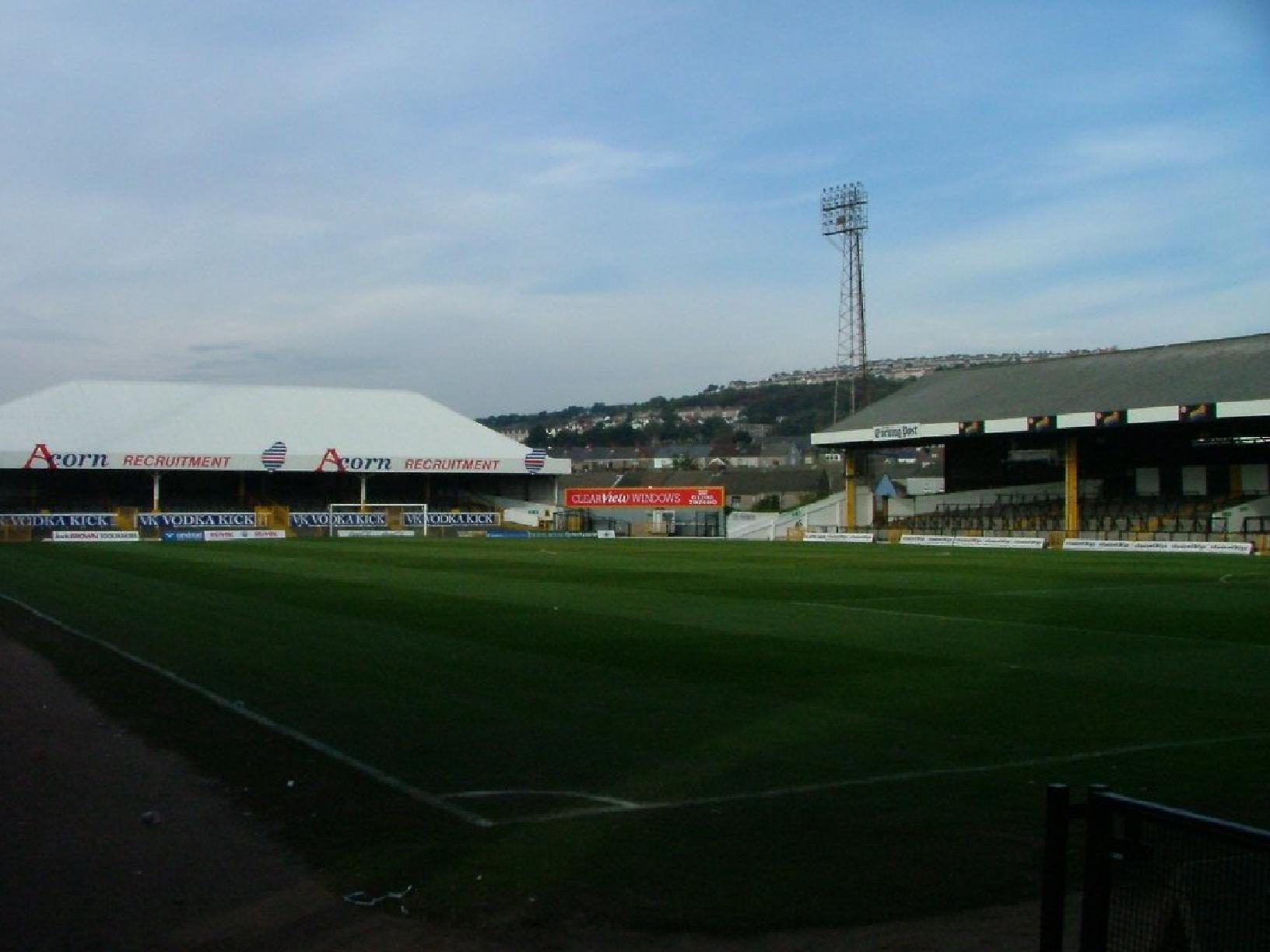
Swansea Town made an instant mark: their first professional match was a 1–1 draw against Cardiff City at the Vetch Field on 7 September 1912, Billy Ball scoring the club's first goal, and in their first season they won the Welsh Cup. A famous 1–0 FA Cup win over English champions Blackburn Rovers followed in 1915. After the First World War the club became founder members of the Football League's new Third Division in 1920. Under Joe Bradshaw they won the Third Division South title in 1924–25 and reached the FA Cup semi-final in 1925–26 — a height the cup run would not match for 38 years. The 1930s brought financial strain and player sales, lightened by a second Welsh Cup in 1932 and by Cyril Pearce's club-record 40 goals in a season in 1931–32. Swansea held their Second Division place, just, until the Second World War stopped the game.
Champions Again, the Golden Boy, Europe — and the Slide (1945–1970)

Relegated in 1947, Swansea bounced straight back as Third Division South champions in 1948–49. The post-war side was built around local boy Ivor Allchurch, the "Golden Boy of Welsh football", who became the club's record scorer across two spells (1947–1958 and 1965–1968) and starred for Wales at the 1958 World Cup; his statue stands outside the stadium today. The Welsh Cup win of 1961 made Swansea the first Welsh club to play in Europe, in the Cup Winners' Cup, and Trevor Morris's side reached a second FA Cup semi-final in 1964, beating Liverpool at Anfield in the quarter-final. Then the money ran out: relegations in 1965 and 1967 dropped Swansea into the Fourth Division for the first time. The Vetch still saw its record crowd — 32,796 against Arsenal in the FA Cup in February 1968 — and in January 1969 players Roy Evans and Brian Purcell were killed in a car crash on the way to a match. Swansea became a city in 1969, the club took the name Swansea City, and promotion back to the Third Division followed in 1970.
The Toshack Miracle: Fourth Division to Sixth in England, then the Fall (1970–1986)

After years of struggle — including an application for re-election to the League — former Liverpool striker John Toshack arrived as player-manager in 1978 and transformed the club: promotions in 1978, 1979 and 1981 carried Swansea from the Fourth Division to the First Division in four seasons, a rise then unmatched in English football. In 1981–82 Swansea opened with a 5–1 win over Leeds United, beat Tottenham Hotspur, Arsenal, Liverpool and Manchester United, led the First Division with twelve games left — and finished sixth, still the club's highest-ever league finish. Welsh Cup wins in 1981, 1982 and 1983 kept European football coming, including the club-record 12–0 win over Sliema Wanderers in the Cup Winners' Cup. The fall was brutal: relegation in 1983, Toshack gone by 1984, a winding-up order in 1985 survived only through local fundraising, and relegation back to the Fourth Division in 1986 — all four divisions fallen through in four years.
The Vetch Years: Play-Offs, a First Wembley Win, the £1 Sales and the Great Escape (1986–2005)

Swansea stabilised in the lower divisions: play-off promotion in 1988, Welsh Cups in 1989 and 1991 — and with them, Europe — and in 1994 a first Wembley appearance, and a win, beating Huddersfield Town on penalties to lift the Football League Trophy. A Wembley play-off final was lost in 1997, but the Third Division title followed in 2000 under John Hollins. The club was then sold for £1 in 2001 — twice — ending with Australian-fronted owner Tony Petty, whose attempt to sack seven players triggered supporter revolt; a local consortium led by Mel Nurse took over, the Supporters' Trust was formed, and Huw Jenkins became chairman in January 2002. Then came the Great Escape: on 3 May 2003, bottom of the Football League for much of the season, Brian Flynn's Swansea had to beat Hull City at the Vetch on the final day to avoid relegation to the Conference — and local lad James Thomas scored a hat-trick in a 4–2 win that kept Swansea up by a point. Two years later Kenny Jackett's side won promotion in the final season at the Vetch Field, the old ground closing with the 2005 FAW Premier Cup final.
The Liberty, the Swansea Way and a First Major Trophy (2005–2013)
The club moved to the Liberty Stadium in July 2005 and won the Football League Trophy and the FAW Premier Cup in the first season there. Former captain Roberto Martínez became manager in 2007 and won the League One title in 2007–08 with a possession game — the "Swansea Way" — that became the club's identity. After Paulo Sousa's season, Brendan Rodgers took Swansea up through the play-offs: a 4–2 win over Reading at Wembley on 30 May 2011, with a Scott Sinclair hat-trick, made them the first Welsh club to play in the Premier League. They finished 11th, beating Arsenal, Liverpool and champions Manchester City at home. Then, in the centenary season of 2012–13, under Michael Laudrup, Swansea won the League Cup — beating Bradford City 5–0 at Wembley on 24 February 2013, the biggest winning margin in a League Cup final, and the first major trophy in the club's history — and finished ninth in the Premier League.
Europe, a Best Premier League Season, Relegation and the Championship Years (2013–present)
The 2013–14 Europa League run took Swansea past Malmö and Petrolul Ploiești to the group stage, where they won 3–0 away to Valencia at the Mestalla, finished second in the group, and fell to Napoli in the round of 32, days after Laudrup's dismissal, with Garry Monk in charge. Monk's full season brought the club's best Premier League campaign: eighth place with 56 points in 2014–15, with league doubles over Arsenal and Manchester United. But decline followed: an American-led consortium bought the club in 2016, Paul Clement saved the club in 2017 — and relegation finally came in May 2018, ending seven Premier League seasons. The Championship years brought near-misses under Steve Cooper — play-off semi-finalists in 2020 and play-off final losers to Brentford in 2021 — then mid-table seasons and managerial churn. The American consortium sold its majority stake in November 2024. A club sold for £1 at the start of the century had, within a dozen years, won a major trophy at Wembley and played in Europe — the rise built entirely on the final-day escape of 2003.
Honours
| Trophy | Titles | Years |
|---|---|---|
| League title (First Division / Premier League) | 0 | Never won — best finish 6th, 1981–82 |
| FA Cup | 0 | Never won — semi-finalists 1925–26, 1963–64 |
| League Cup | 1 | 2012–13 |
| Third Division South / League One (third tier) | 3 | 1924–25, 1948–49, 2007–08 |
| Third Division (fourth tier) | 1 | 1999–2000 |
| Championship play-offs | 1 | 2011 |
| Football League Trophy | 2 | 1993–94, 2005–06 |
| Welsh Cup | 10 | 1912–13, 1931–32, 1949–50, 1960–61, 1965–66, 1980–81, 1981–82, 1982–83, 1988–89, 1990–91 |
| FAW Premier Cup | 2 | 2004–05, 2005–06 |
Timeline
- 1912 — Swansea Town are founded; the first professional match is a 1–1 draw with Cardiff City at the Vetch Field on 7 September, and the club win the Welsh Cup in their first season.
- 1920 — Swansea become founder members of the Football League's new Third Division.
- 1925–26 — Third Division South champions in 1925 under Joe Bradshaw; FA Cup semi-finalists the following season — the furthest the club had ever gone.
- 1949 — Third Division South champions again, as the young Ivor Allchurch breaks through; he goes on to become the club's record scorer, with 502 appearances across two spells.
- 1961–64 — The 1961 Welsh Cup makes Swansea the first Welsh club in Europe; a second FA Cup semi-final follows in 1964 after a quarter-final win at Liverpool.
- 1968 — A record Vetch Field crowd of 32,796 watches the FA Cup tie against Arsenal (17 February) — in a decade that otherwise brings relegation to the Fourth Division for the first time (1967).
- 1981–82 — John Toshack's side complete three promotions in four seasons and finish sixth in the First Division — still the club's highest-ever league finish — before falling back to the Fourth Division by 1986.
- 1994 — A first Wembley appearance ends in victory: the Football League Trophy, won on penalties against Huddersfield Town.
- 2003 — The Great Escape: James Thomas's hat-trick beats Hull City 4–2 at the Vetch on the final day (3 May) and keeps Swansea in the Football League by a point.
- 2005 — After 93 years the club leave the Vetch Field for the new Liberty Stadium, winning promotion in the old ground's final season.
- 2011 — Play-off winners at Wembley (4–2 vs Reading): Swansea become the first Welsh club to play in the Premier League.
- 2013 — The League Cup: a 5–0 Wembley win over Bradford City in the centenary season brings the first major trophy in the club's history and a Europa League run to the last 32 — followed, after the best Premier League season (8th, 2014–15), by relegation in 2018 and Championship play-off heartbreak in 2020 and 2021.
References
- Wikipedia — "Swansea City A.F.C." (history, honours and records).
- Wikipedia — "List of Swansea City A.F.C. records and statistics" and "Swansea.com Stadium".
- Swansea City — swanseacity.com, "The Great Escape" and Ivor Allchurch features.
- Wikimedia Commons — file pages for the photographs used.
Image source: Wikimedia Commons.


