 YAVE
Wolverhampton Wanderers
The history of Wolverhampton Wanderers: the Cullis glory years, the floodlit friendlies and Steve Bull
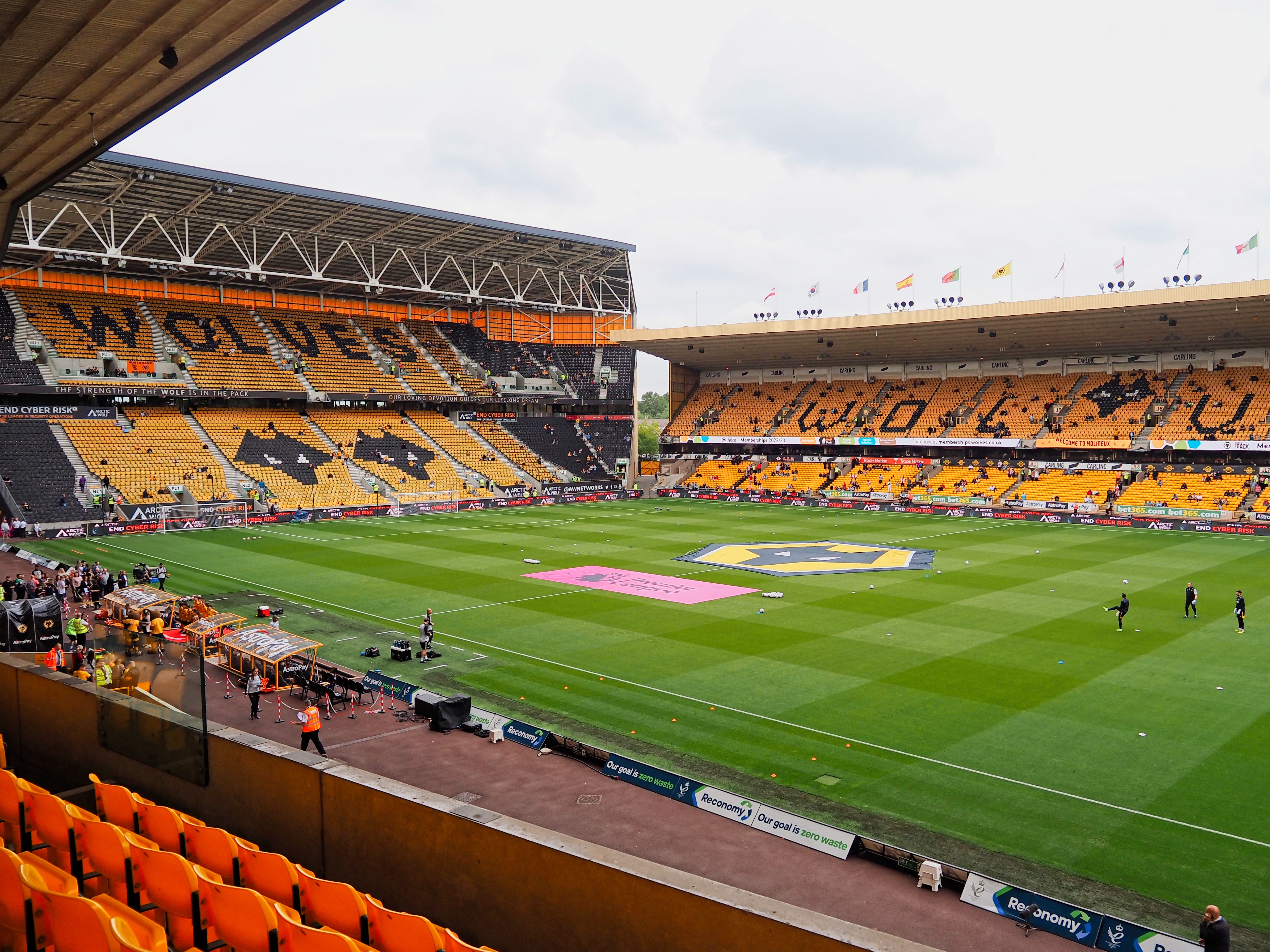
Wolverhampton Wanderers were formed in 1877 as St. Luke's, a school team from Blakenhall, and took their present name in 1879 after merging with the football section of a local cricket club. In their famous old gold shirts they became one of the twelve founder members of the Football League in 1888, and they have played at Molineux — the first stadium built for a Football League club — since 1889. The ground now holds around 32,000.
Wolves' story peaks twice. Under Stan Cullis in the 1950s they won their only three league titles, played the floodlit friendlies that helped inspire the European Cup, and were hailed as champions of the world. Thirty years later, after a collapse into the fourth tier, Steve Bull's goals fired them back up the divisions; in the Fosun era, Nuno Espírito Santo returned them to Europe. Through it all, the club has collected four FA Cups and two League Cups.
Contents
- St Luke's, Founder Members and the First FA Cups (1877–1914)
- Between the Wars: Third Tier, Return and Near Misses (1919–1949)
- The Cullis Glory Years (1949–1960)
- League Cups, the UEFA Cup Final and Collapse (1965–1986)
- Bull's Goals, the Hayward Years and Near Misses (1986–2016)
- The Fosun and Nuno Revival (2016–present)
- Honours
- Timeline
- References
St Luke's, Founder Members and the First FA Cups (1877–1914)
St Luke's played their first known match in January 1877; renamed Wolverhampton Wanderers in 1879, the club joined the Football League at its foundation in 1888 — their first league match a 1–1 draw with Aston Villa — and moved to Molineux in 1889, reaching their first FA Cup final that year. Wolves won the FA Cup in 1893, beating Everton 1–0, and were finalists again in 1896. Relegated to the Second Division for the first time in 1906, they then produced a remarkable sequel: in 1908, as a second-tier club, they won the FA Cup again, beating Newcastle United 3–1. Two cup wins before the First World War made Wolves one of Edwardian football's established cup names.
Between the Wars: Third Tier, Return and Near Misses (1919–1949)
Post-war decline took Wolves down to the third tier in 1923; they won the Third Division North at the first attempt but spent most of the 1920s in Division Two. Under Major Frank Buckley they won the Second Division title in 1931–32 and re-established themselves in the First Division. The late-1930s side came agonisingly close to glory: league runners-up in 1937–38, losing the title to Arsenal after a final-day defeat, runners-up again in 1938–39 to Everton, and FA Cup final losers in 1939 to Portsmouth — the great "nearly" team, with a young centre-half named Stan Cullis emerging as captain. The Second World War interrupted the side's peak; post-war, Wolves were runners-up again in 1949–50, on goal average — but first, in 1949, Cullis the manager won the FA Cup.
The Cullis Glory Years (1949–1960)

Stan Cullis, appointed manager in 1948, and his captain Billy Wright — the first footballer in the world to win 100 international caps — built the finest side in Wolves' history. The FA Cup came in 1949, Leicester City beaten 3–1, then the club's first league championship in 1953–54, overhauling rivals West Bromwich Albion, followed by back-to-back titles in 1957–58 and 1958–59 and a fourth FA Cup in 1960, Blackburn Rovers beaten 3–0. Cullis's teams — Wright, Bert Williams, Johnny Hancocks, Peter Broadbent, Jimmy Mullen — scored over 100 league goals in three straight seasons, a first in English football.

With floodlights installed at Molineux in 1953, Wolves also hosted a famous series of floodlit friendlies against leading foreign sides, beating Spartak Moscow, Racing Club and Maccabi Tel Aviv among others. On 13 December 1954 they beat Hungarian champions Budapest Honvéd 3–2 at Molineux, live on BBC television, a year after Hungary's 6–3 win over England at Wembley. The English press hailed Wolves "Champions of the World"; L'Équipe journalist Gabriel Hanot replied that Wolves should first prove it against the likes of Real Madrid and AC Milan, and proposed a European championship for clubs — the proposal that led to the first European Cup in 1955–56. In the competition itself Wolves reached the quarter-finals in 1959–60, losing to Barcelona. Cullis was sacked in September 1964, and relegation followed in 1965 after 26 consecutive top-flight seasons.
League Cups, the UEFA Cup Final and Collapse (1965–1986)
Wolves bounced back in 1966–67 and, under Bill McGarry, enjoyed a strong early 1970s: fourth place in 1970–71, the final of the inaugural UEFA Cup in 1972 — Juventus beaten on the way, Tottenham Hotspur winning the two-legged final 3–2 on aggregate — and the League Cup in 1974, Manchester City beaten 2–1 at Wembley. Full-back Derek Parkin, signed in 1968, played in both League Cup wins and finished his career in 1982 with a club-record 609 first-team appearances. Relegation in 1976 was answered by the Second Division title in 1976–77, and under John Barnwell Wolves won the League Cup again in 1980, beating European champions Nottingham Forest 1–0 through Andy Gray's goal — the club's last major trophy to date. Then came the collapse: financial crisis brought the club close to liquidation in 1982, and between 1981–82 and 1985–86 Wolves were relegated four times in five seasons, falling into the Fourth Division in 1986 for the first and so far only time in their history.
Bull's Goals, the Hayward Years and Near Misses (1986–2016)

The revival began in the fourth tier under Graham Turner and new signing Steve Bull, bought from West Bromwich Albion for £65,000 in November 1986. Bull scored 52 goals in 1987–88 as Wolves won the Fourth Division title and the Sherpa Van Trophy, then 50 more as they won the Third Division title in 1988–89 — making Wolves the first club to have been champions of all four divisions. Bull finished with a club-record 306 goals in all competitions — 250 of them in the league — in 561 appearances, yet never played top-flight football for Wolves, while still winning 13 England caps and a place at the 1990 World Cup. Sir Jack Hayward, a lifelong fan, bought the club in 1990 and rebuilt Molineux, but the 1990s became a story of expensive play-off near misses. The breakthrough came under Dave Jones: the 2003 play-off final win, 3–0 against Sheffield United, took Wolves into the Premier League for one season. Mick McCarthy's side returned as Championship champions in 2008–09 and survived two Premier League seasons, before relegation in 2012 and a second straight drop into League One in 2013. Kenny Jackett's team won League One with a record 103 points in 2013–14.
The Fosun and Nuno Revival (2016–present)

Fosun International bought the club in July 2016 for a reported £45 million and, after short spells under Walter Zenga and Paul Lambert, appointed Nuno Espírito Santo in May 2017. Built around Rúben Neves, Diogo Jota, Raúl Jiménez and captain Conor Coady, Wolves won the Championship in 2017–18, then finished seventh in the Premier League in both 2018–19 and 2019–20, reached an FA Cup semi-final and the Europa League quarter-finals in 2020 — European football back at Molineux after 39 years. Nuno left in 2021; Bruno Lage delivered a tenth-place finish, and Julen Lopetegui rescued the club from the foot of the table in 2022–23 before Gary O'Neil's two seasons of mid-table stability. Vítor Pereira kept Wolves up in 2024–25 but was sacked in November 2025 after a winless start to the season, and former Wolves midfielder Rob Edwards was appointed head coach on 12 November 2025.
Honours
| Trophy | Titles | Years |
|---|---|---|
| League title (First Division) | 3 | 1953–54, 1957–58, 1958–59 |
| FA Cup | 4 | 1892–93, 1907–08, 1948–49, 1959–60 |
| League Cup | 2 | 1973–74, 1979–80 |
| FA Charity Shield | 4 | 1949*, 1954*, 1959, 1960* (*shared) |
| UEFA Cup | 0 | Never won — runners-up 1971–72 |
| Second Division / Championship | 4 | 1931–32, 1976–77, 2008–09, 2017–18 |
| Third Division / League One | 3 | 1923–24, 1988–89, 2013–14 |
| Fourth Division | 1 | 1987–88 |
Wolves' record scorer is Steve Bull, with 306 goals in all competitions (250 of them in the league) in 561 appearances between 1986 and 1999, and their record appearance maker is Derek Parkin, with 609 first-team appearances (501 in the league) between 1968 and 1982. Wolves were the first club to have been champions of all four professional divisions.
Timeline
- 1877 — St Luke's F.C. formed by a Blakenhall school team; first known match vs Stafford Road, 13 January 1877.
- 1888 — Wolves become one of the twelve founder members of the Football League; first league match: 1–1 vs Aston Villa, 8 September 1888.
- 1889 — The club moves to Molineux, its home ever since.
- 1893 — First FA Cup: Wolves beat Everton 1–0 in the final.
- 1908 — Second FA Cup, won as a Second Division club (3–1 vs Newcastle United).
- 1931–32 — Second Division champions; the late-1930s Buckley side then finishes league runners-up twice (1937–38, 1938–39) and loses the 1939 FA Cup final.
- 1949–1960 — The Cullis era: FA Cups in 1949 and 1960 and the club's only three league titles — 1953–54, 1957–58, 1958–59 — captained by Billy Wright.
- 13 December 1954 — Wolves beat Honvéd 3–2 under the Molineux floodlights, live on the BBC — the match that helped inspire the creation of the European Cup.
- 1972 — Wolves reach the final of the first UEFA Cup, losing to Tottenham Hotspur; League Cups follow in 1974 (McGarry) and 1980 (Barnwell).
- 1986–1989 — After four relegations in five seasons drop Wolves into the Fourth Division, Graham Turner and Steve Bull fire them back up: Fourth Division title and Sherpa Van Trophy (1988) and Third Division title (1989).
- 2003 — Dave Jones's Wolves beat Sheffield United 3–0 in the play-off final to reach the Premier League for the first time; Mick McCarthy's side return as Championship champions in 2009.
- 2016–2020 — Fosun buy the club (2016); Nuno Espírito Santo wins the Championship (2018), delivers two 7th-place Premier League finishes and a Europa League quarter-final (2020).
References
- Wikipedia — "Wolverhampton Wanderers F.C." (history, honours and records).
- Wikipedia — "List of Wolverhampton Wanderers F.C. records and statistics" and "Molineux Stadium".
- Wolverhampton Wanderers — wolves.co.uk, official club History.
- Wikimedia Commons — file pages for the photographs used.
Image source: Wikimedia Commons.


